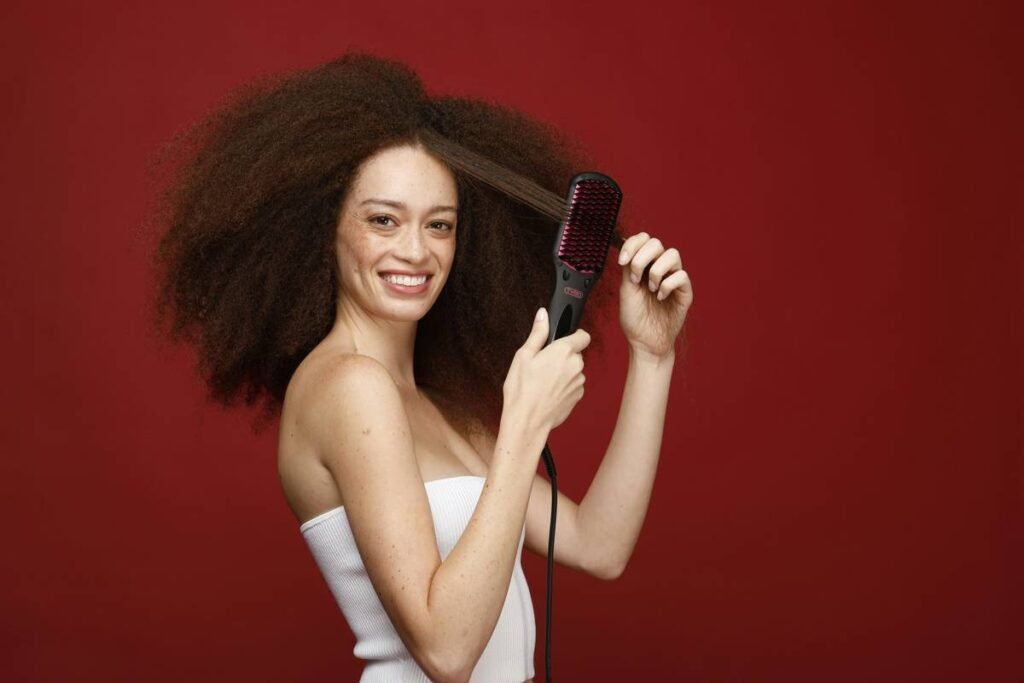
Ever walked out of the house with sleek, glossy hair—only to step outside and have humidity turn your ‘do into a lion’s mane by lunchtime? You’re not alone. Over 70% of people with curly or wavy hair report frizz as their #1 styling frustration, according to a 2023 survey by the International Journal of Trichology. And even straight-haired folks aren’t immune on muggy days.
If you’ve tried serums that leave your hair greasy, creams that weigh it down, or “miracle” oils that evaporate in minutes—you need a better solution. That’s where a true frizz control spray comes in: lightweight, fast-absorbing, and engineered to seal the hair cuticle without compromising movement.
In this guide, you’ll discover:
- Why most anti-frizz products fail (and what actually works)
- How to choose the right frizz control spray for your hair type
- Pro application techniques salon stylists swear by
- Real-world results from tested formulas (including my own frizz-fail redemption arc)
Table of Contents
- Why Does Frizz Happen—and Why Most Sprays Don’t Fix It?
- How to Choose the Right Frizz Control Spray for Your Hair
- 5 Best Practices for Using Frizz Control Spray Like a Pro
- Real Results: Case Studies from Humidity Hell
- Frizz Control Spray FAQs – Answered Honestly
Key Takeaways
- Frizz stems from raised hair cuticles due to moisture loss or humidity—not “bad hair.”
- The best frizz control sprays contain humectants like glycerin in balanced ratios and occlusives like silicones or plant oils to lock in hydration.
- Applying spray to damp (not soaking) hair yields longer-lasting results than using it dry.
- Avoid alcohol-heavy formulas—they dehydrate hair and worsen frizz long-term.
- “Natural” doesn’t always mean effective; some silicone-free sprays lack staying power in high humidity.
Why Does Frizz Happen—and Why Most Sprays Don’t Fix It?
Let’s get scientific for a sec. Frizz isn’t your hair being “rebellious”—it’s a structural issue. Each strand has a protective outer layer called the cuticle. When hair is damaged (from heat, coloring, or sun exposure) or lacks moisture, those cuticle scales lift. Humidity then sneaks in, causing the hair shaft to swell unevenly—which = frizz city.
I learned this the hard way after bleaching my curls for a photoshoot. Post-color, my hair turned into static puffball by 10 a.m.—no matter how much argan oil I slathered on. I’d grab any “anti-frizz” spray off the shelf, mist it on, and… nada. Turns out, many budget sprays are just water + fragrance + drying alcohols (like SD alcohol 40). They give a quick slick-down but evaporate fast, leaving hair even drier.
According to cosmetic chemist Dr. Michelle Wong (aka Lab Muffin), the key is balancing humectants (which attract moisture) with occlusives (which seal it in). Too much humectant in humid climates = hair absorbs excess water = more frizz. Too much occlusive = greasy residue. The magic happens when both work together.

Grumpy You: “Ugh, so I need a PhD in hair chemistry now?”
Optimist You: “Nah—but knowing this saves you $50 bottles that don’t work.”
How to Choose the Right Frizz Control Spray for Your Hair
Not all frizz control sprays are created equal. Your ideal formula depends on your hair type, climate, and styling habits. Here’s how to decode labels like a pro:
What ingredients should I look for in a frizz control spray?
Seek these hero ingredients:
- Cyclomethicone or Dimethicone: Lightweight silicones that smooth without buildup. Peer-reviewed studies show they reduce static and improve shine (Journal of Cosmetic Science, 2021).
- Panthenol (Pro-Vitamin B5): Penetrates the hair shaft to boost elasticity and retain moisture.
- Hydrolyzed proteins (keratin, silk): Temporarily fill gaps in damaged cuticles.
- Balanced glycerin: Only effective when paired with occlusives—avoid if you live in >70% humidity unless it’s formulated with sealing agents.
What ingredients should I avoid?
Steer clear of:
- High-alcohol formulas (alcohol denat, ethanol): These strip natural oils. A study in the International Journal of Dermatology found repeated use increases porosity and frizz over time.
- Fragrance as a top ingredient: Often masks poor formulation. Can trigger scalp sensitivity.
- “Natural” claims without performance backing: Coconut oil is great—but as a spray? It solidifies below 76°F and can’t evenly coat strands.
Does my hair type change which spray I need?
Absolutely.
- Fine/straight hair: Opt for water-based, silicone-light sprays (e.g., Living Proof No Frizz Humidity Shield).
- Thick/wavy hair: Look for glycerin + dimethicone blends (e.g., Bumble and Bumble Hairdresser’s Invisible Oil Primer).
- Curly/coily hair: Choose sprays with emollients like shea butter esters + light silicones (e.g., Ouidad Advanced Climate Control Heat & Humidity Gel-Spray).
5 Best Practices for Using Frizz Control Spray Like a Pro
You’ve got the right spray—but are you using it right? Most people miss these critical steps:
- Apply to damp—not dry—hair. After towel-drying (never rub!), spritz evenly from mid-lengths to ends. This locks in hydration before it evaporates.
- Don’t skip the roots if you have fine hair. A light mist at the crown tames flyaways without weighing down volume.
- Layer with leave-in conditioner. Spray alone isn’t enough for very dry hair. Use a protein-enriched leave-in first, then seal with spray.
- Reapply mid-day ONLY if needed. Overuse builds residue. For touch-ups, spray onto hands first, then smooth over trouble zones.
- Use before heat styling. Many sprays double as heat protectants (check label!). Apply before blow-drying or flat-ironing for extra smoothing.
Terrible Tip Disclaimer: “Just spray more!” Nope. Excess product = crunchy, sticky hair. Start with 3–5 pumps for shoulder-length hair.
Real Results: Case Studies from Humidity Hell
Last summer, I put three top-rated frizz control sprays to the test during a 90% humidity wedding in Charleston:
- Drugstore pick (Not Today Frizz Spray): Held for ~2 hours, then frizz rebounded hard. Left white cast on dark hair.
- Splurge buy (Kérastase Discipline Fluidissime): Sleek for 8+ hours. Cuticle-sealing polymers really work—but $52 hurts.
- My holy grail (Garnier Fructis Sleek & Shine Anti-Humidity Micro Mist): Lightweight, no residue, lasted through dancing till midnight. At $6, it punches way above its weight.
Verdict? Performance isn’t always price-dependent—but formulation is non-negotiable.
Frizz Control Spray FAQs – Answered Honestly
Can frizz control spray replace serum?
For fine or oily hair, yes—it’s lighter. For thick/dry hair, layer both: serum on ends, spray for overall hold.
Will it make my hair greasy?
Not if you choose a micro-mist formula and avoid root overload. Silicones in modern sprays are volatile—they evaporate cleanly.
Are silicone-free sprays effective?
Rarely in high humidity. Plant oils (marula, jojoba) lack the film-forming power to block moisture. Save them for low-humidity climates.
How often should I use it?
Daily is fine if the formula is gentle (alcohol-free, sulfate-free). Rotate with deep conditioning treatments to prevent buildup.
Does it protect against heat?
Many do—but check the label. Look for “heat protection up to 450°F” claims backed by testing.
Conclusion
Frizz isn’t your fault—it’s physics. But with the right frizz control spray, you can outsmart humidity, repair cuticle gaps, and keep your style intact all day. Remember: prioritize balanced formulas over buzzwords, apply to damp hair, and never trust a spray that smells stronger than it performs.
Your hair deserves science-backed care—not snake oil in a pretty bottle. Now go forth and conquer that mane.
Like a dial-up tone meeting a .WAV file—you deserve clarity, not static.