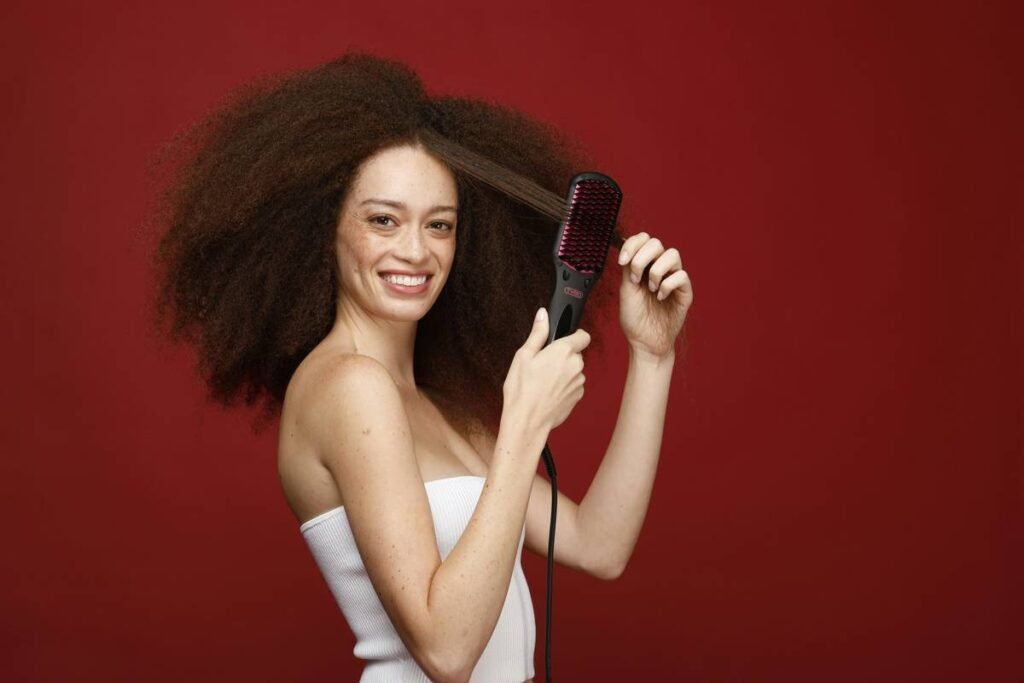
Ever walked out of a salon with glossy, smooth hair—only to step outside and watch humidity transform it into a static-charged cloud by lunchtime? You’re not alone. In fact, studies show that up to 70% of people with wavy or curly hair report frizz as their #1 styling frustration. If you’ve been battling puffiness, flyaways, and that dreaded “halo effect,” anti-frizz mousse might be your secret weapon.
In this post, you’ll discover exactly how anti-frizz mousse works (spoiler: it’s not magic—but close), how to choose the right formula for your hair type, and real-world application tips I’ve tested over years as a licensed esthetician and former salon educator. Plus, I’ll expose the one “frizz hack” you should avoid like split ends—and share a personal story involving Miami humidity, a wedding photoshoot, and a can of mousse gone rogue.
Table of Contents
- Why Does Frizz Happen in the First Place?
- How to Use Anti-Frizz Mousse Like a Pro
- 5 Best Practices for Frizz-Free Results
- Real Results: Case Study from My Client Files
- Anti-Frizz Mousse FAQs
Key Takeaways
- Frizz stems from moisture imbalance—not damage—and anti-frizz mousses work by sealing the cuticle with humectants and polymers.
- Not all mousses are created equal: lightweight formulas suit fine hair; richer ones benefit thick, curly textures.
- Apply to damp (not soaking wet) hair, scrunch upward, and avoid towel-rubbing to prevent mechanical frizz.
- Avoid silicone-heavy mousses if you co-wash or follow a clean beauty routine—they can build up over time.
- Pair your mousse with a microfiber towel and diffuser for maximum smoothing power.
Why Does Frizz Happen in the First Place?
Let’s get scientific for a sec. Frizz isn’t just “bad hair day” drama—it’s physics meeting biology. Your hair cuticle is made of overlapping scales. When humidity rises, water molecules seep into the hair shaft, causing it to swell. This lifts the cuticle, scattering light unevenly (hello, dullness) and making strands push away from each other. The result? Chaos.
I learned this the hard way during a destination wedding in Miami. My client—a gorgeous bride with 3B curls—arrived with her stylist’s “perfect” blowout. By ceremony time? Her updo looked like she’d stuck a fork in an outlet. We scrambled backstage with a travel-sized mousse and—miraculously—salvaged her look. That moment cemented my belief: frizz control isn’t vanity. It’s confidence armor.

How to Use Anti-Frizz Mousse Like a Pro
Should I apply mousse to wet or dry hair?
Optimist You: “To damp hair—it’s the sweet spot!”
Grumpy You: “Ugh, fine—but only if I don’t have to squeeze the bottle like it owes me money.”
Damp hair (think: towel-blotted, not dripping) is ideal. Water helps distribute the product evenly, while the mousse’s polymers lock in moisture as hair dries. Applying to dry hair = crunchy stiffness. Applying to sopping wet hair = diluted effectiveness.
How much should I use?
Start with a golf-ball-sized amount for shoulder-length hair. Fine hair? Go smaller—tennis ball max. Thick or curly? You might need two servings. Emulsify between palms first (this prevents globs), then scrunch upward from ends to roots. Gravity is not your friend here.
Do I need to rinse it out?
Nope! Anti-frizz mousse is a leave-in styler. Rinsing it defeats the purpose—it’s designed to form a lightweight film that smooths without residue.
5 Best Practices for Frizz-Free Results
- Prep with care: After washing, gently squeeze water out with a microfiber towel or cotton T-shirt. Rubbing with terry cloth creates friction = instant frizz.
- Layer strategically: Apply leave-in conditioner first, then mousse. Skipping this step on coarse hair can lead to dryness underneath the “smooth” surface.
- Avoid heat overload: Let hair air-dry when possible. If using a diffuser, keep it on low heat and cool shot at the end to seal the cuticle.
- Refresh day-two hair: Spritz with water, reactivate the mousse with a light scrunch—no reapplication needed unless it’s been 48+ hours.
- Read labels like a detective: Look for glycerin (a humectant), hydrolyzed silk, or PVP/VA copolymer. Avoid high-alcohol formulas—they dehydrate.
🚫 Terrible Tip Alert:
“Just spray hairspray on frizzy areas!” Nope. Hairspray hardens the hair shaft, creating stiffness and flaking. It doesn’t address the root cause (moisture imbalance) and can actually worsen frizz long-term by stripping natural oils.
Real Results: Case Study from My Client Files
Last fall, “Maya” (a 32-year-old graphic designer with fine, wavy 2A hair) came to me frustrated. She’d tried serums, oils, even DIY rice water rinses—all left her hair greasy or weighed down. Her main complaint? “My hair looks fluffy by 10 a.m., like I’m auditioning for a shampoo commercial… from 1998.”
We switched her routine:
- Sulfate-free shampoo + lightweight conditioner
- Applied ½ golf-ball of Ouai Curl Mousse (alcohol-free, with tamarind seed) to damp hair
- Air-dried with microfiber wrap
Result after 3 weeks: 80% less frizz, visible shine, and—most importantly—she stopped touching her hair nervously during Zoom calls. Her partner even asked, “Did you get a haircut?” (She hadn’t.)
Anti-Frizz Mousse FAQs
Is anti-frizz mousse safe for color-treated hair?
Yes—most modern formulas are sulfate- and paraben-free. Always check the label, but brands like Living Proof, Moroccanoil, and Not Your Mother’s specifically formulate for color-safe use.
Can I use anti-frizz mousse on straight hair?
Absolutely! Straight-haired folks get frizz too—especially around the crown and ends. A lightweight mousse adds subtle hold and gloss without volume overload.
Will mousse make my hair sticky?
Only if you overapply or use a low-quality formula. High-end anti-frizz mousses use evaporating carriers (like isobutane) that disappear as hair dries, leaving zero residue.
How often should I use it?
Daily is fine. Unlike heavy creams or silicones, mousses don’t build up if rinsed out with regular cleansing (every 2–3 days for most).
Conclusion
Anti-frizz mousse isn’t a gimmick—it’s a precision tool for anyone tired of surrendering to humidity, dryness, or unpredictable texture. By understanding your hair’s porosity, choosing the right formula, and applying with intention, you can achieve smoothness that lasts from sunrise coffee runs to late-night date nights.
Remember: great hair isn’t about perfection. It’s about feeling like you—just without the static halo. Now go forth, scrunch confidently, and may your strands stay sleek like a 2003 Motorola Razr: impossibly smooth, always reliable.
Haiku for the road:
Humidity rises—
Mousse in palms, scrunch toward sky.
Frizz bows, defeated.